
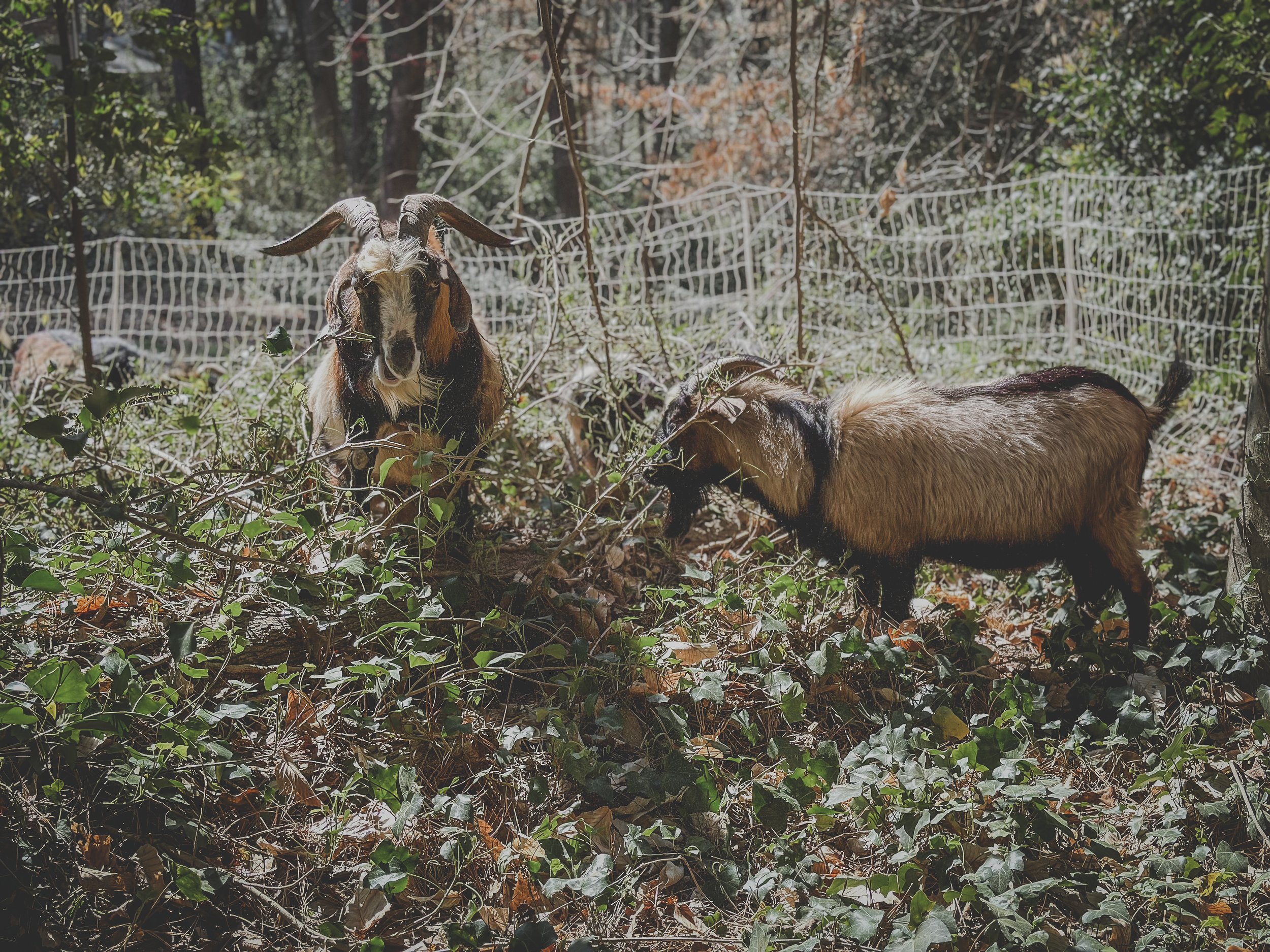
THE MOST FUN & NATURAL WAY TO
RECLAIM YOUR OUTDOORS
SUBMIT YOUR REQUEST
Thank you for taking the time to answer our questions. Feel free to take a look at our FAQ below.
During our busy season (April–November), please allow up to one week to receive your estimate. Average residential projects fall typically fall in the $850–1500 range, but may be more or less depending on size, setup complexity and density of foliage. We do take small jobs, but have a $650 job minimum.

If you are submitting photos for a free remote estimate:
PLEASE INCLUDE:
1. Full Area View
A photo or video showing the entire area that needs clearing
2. Perimeter Walk (Video preferred)
Walk the boundary so we can understand layout + access
Existing fence or where fencing will go
Include any:
Holes, gaps, or damage
Dense brush along edges (this affects setup)
Keep in mind that our electric fencing needs to stake into the ground along a clear path free of debris, brush, downed logs, etc – when the property line is densely foliated, it is often more cost effective to set our fencing up on neighboring properties. We recommend you speak to your neighbor and ensure their cooperation.
3. Close-Up of Vegetation
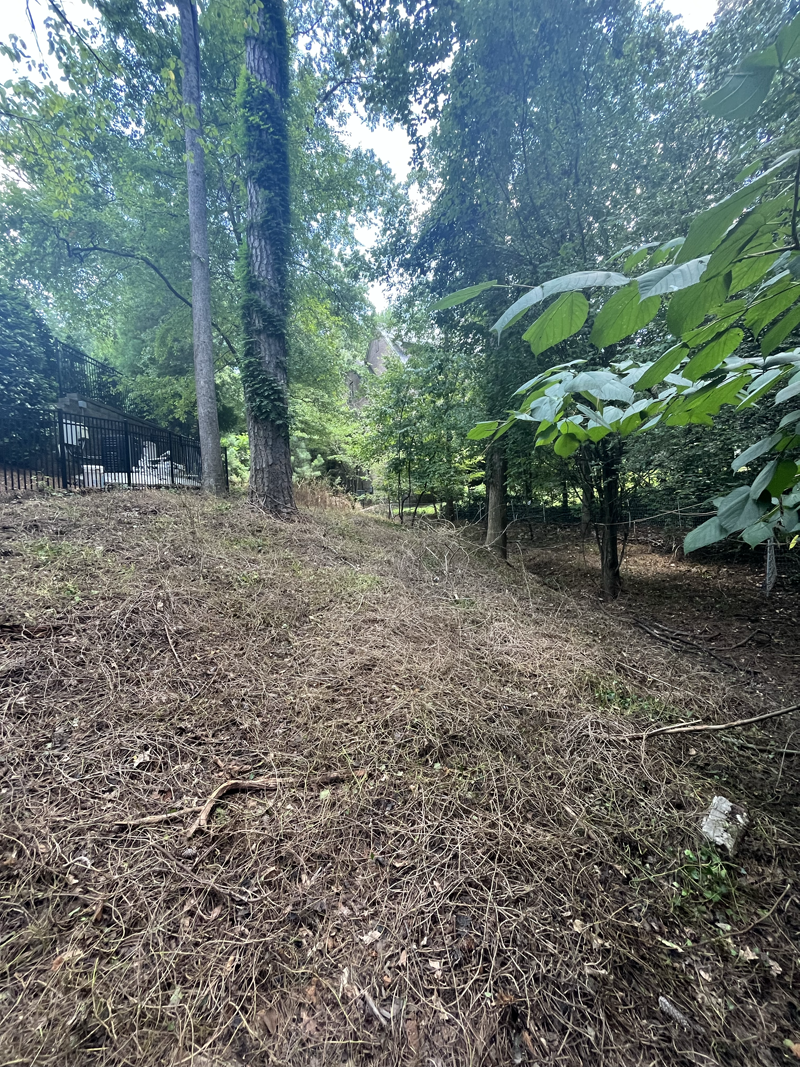
Ground-level shots of predominant weeds/brush so we know what we’re working with.
4. Map/diagram (if applicable)
If your space has multiple areas, or places where there are and aren’t fencing, mixed fencing types, creeks, retaining walls, or other complexities, it can be helpful to sketch out a diagram to show us where things are.
5. House + Access Points (Residential)
Back of house (for planning goat boundaries)
If fenced, please show gates and how they are accessed
Front/driveway (for trailer access + setup)
📩 How to Send
Email: rwggoatquote@gmail.com
Subject line: Property address
⚠️ Helpful Notes
Our electric fencing can’t go through dense brush
We may:
Route fencing wider (sometimes onto neighboring property with permission), or
Add a small fee to pre-clear a path
For most properties, we will need running water and electric access. It’s a great idea to identify where those are if you don’t already know, and to test and ensure they work.
FAQ
Service area

-
Our focus is on small to medium residential jobs, as well as retention ponds, historic cemeteries, municipal and commercial properties.
-
Residential backyards typically fall in the $850-1250 range, depending on a wide variety of factors like size, density and setup needed.
Your estimate will include a base rental rate that will include the max number of days we anticipate it taking the goats to clear the property, a travel fee for properties over 15 miles from us, plus a labor/setup fee that is dependent on how much we need to do to create a secure enclosure for the goats.
We often offer reduced pricing in the winter months.
-
The primary counties we typically serve are: Dekalb, Fulton, Gwinnett, and Cobb. We are located in Stone Mountain, just outside of Decatur and service most of metro Atlanta.
We will travel to parts of Clayton, Henry, Douglas, Rockdale, Cherokee, Fayette and Forsyth for jobs that are a good fit, and when we are not in our busiest season.
-
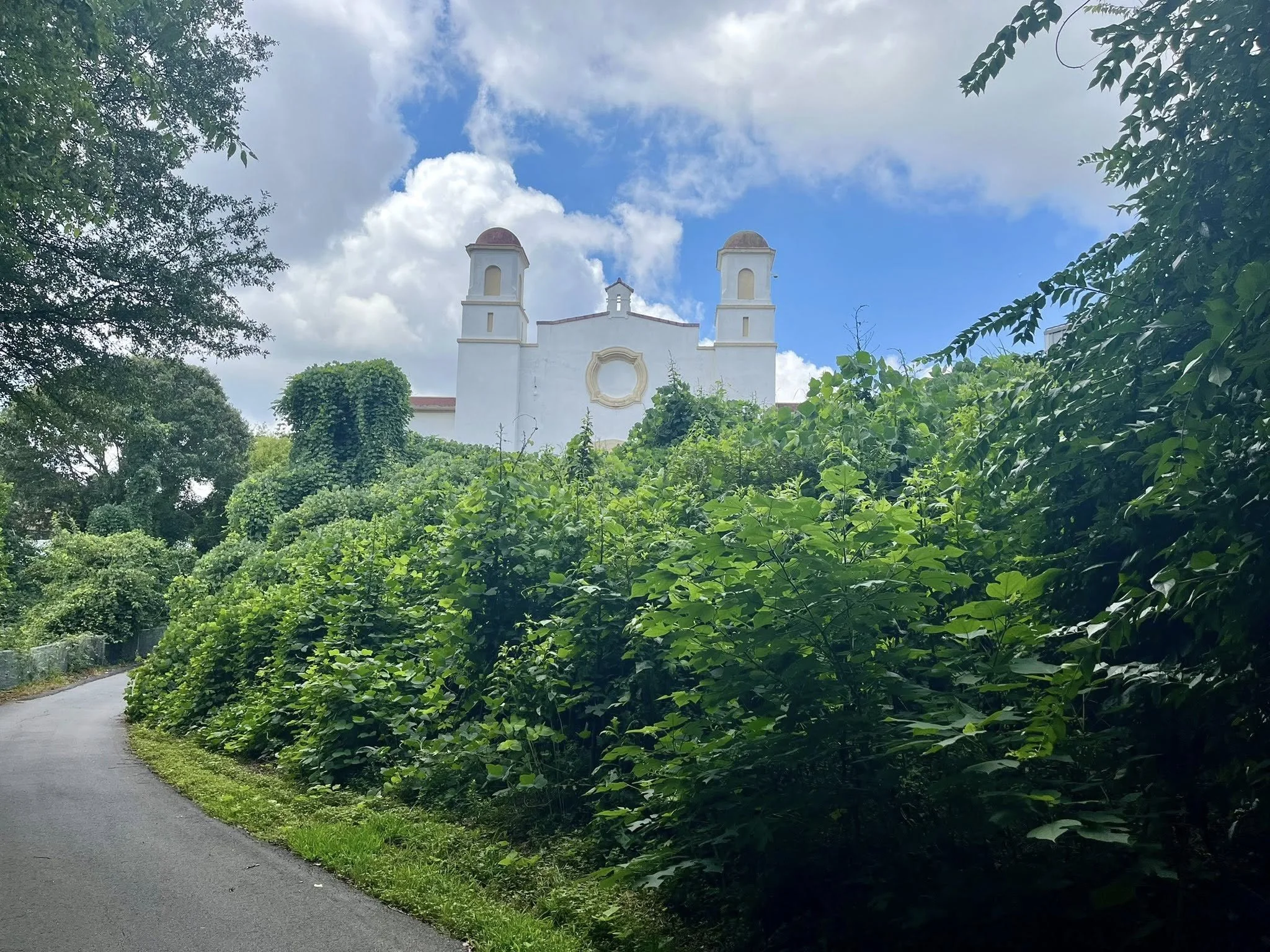
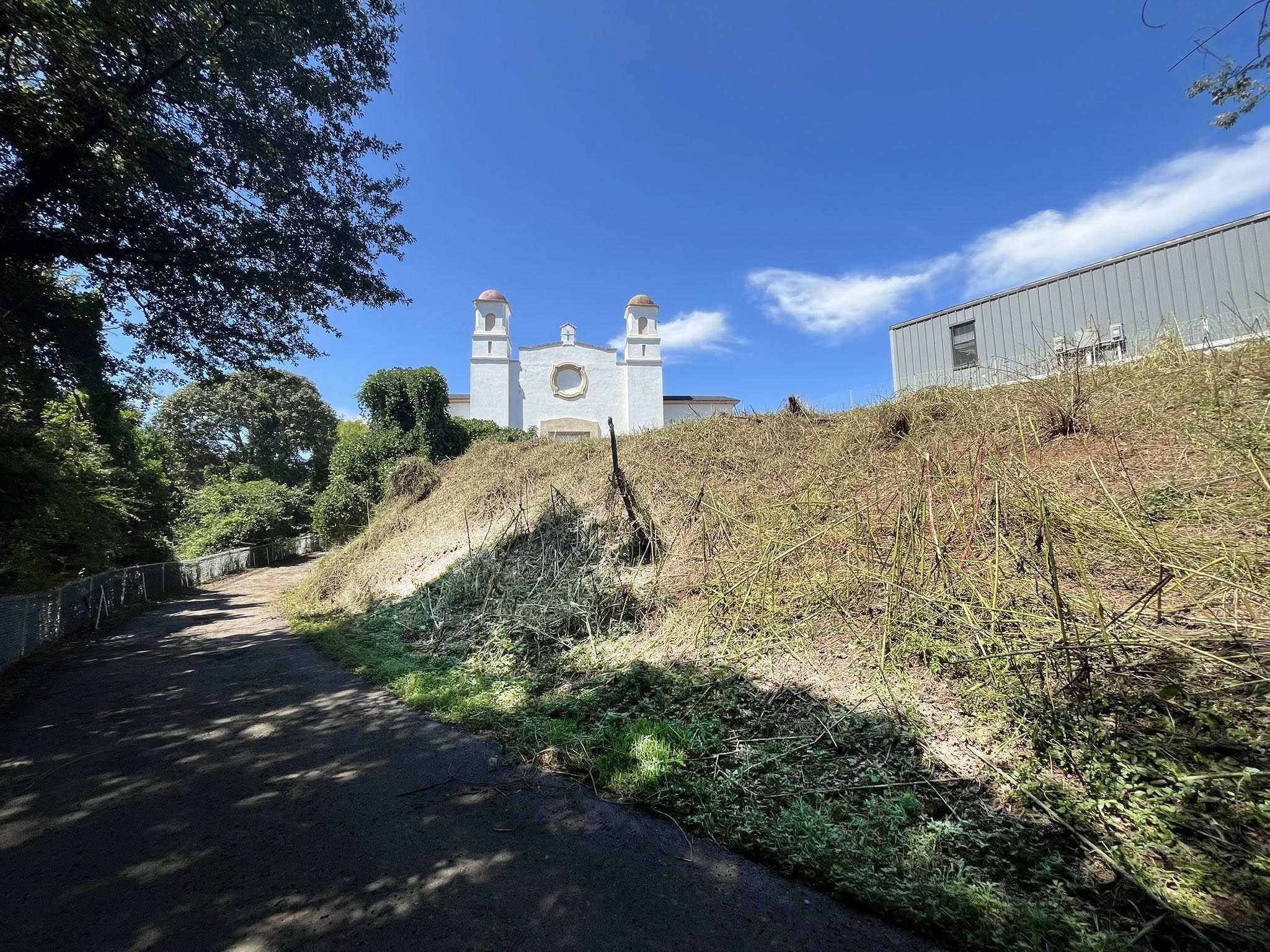
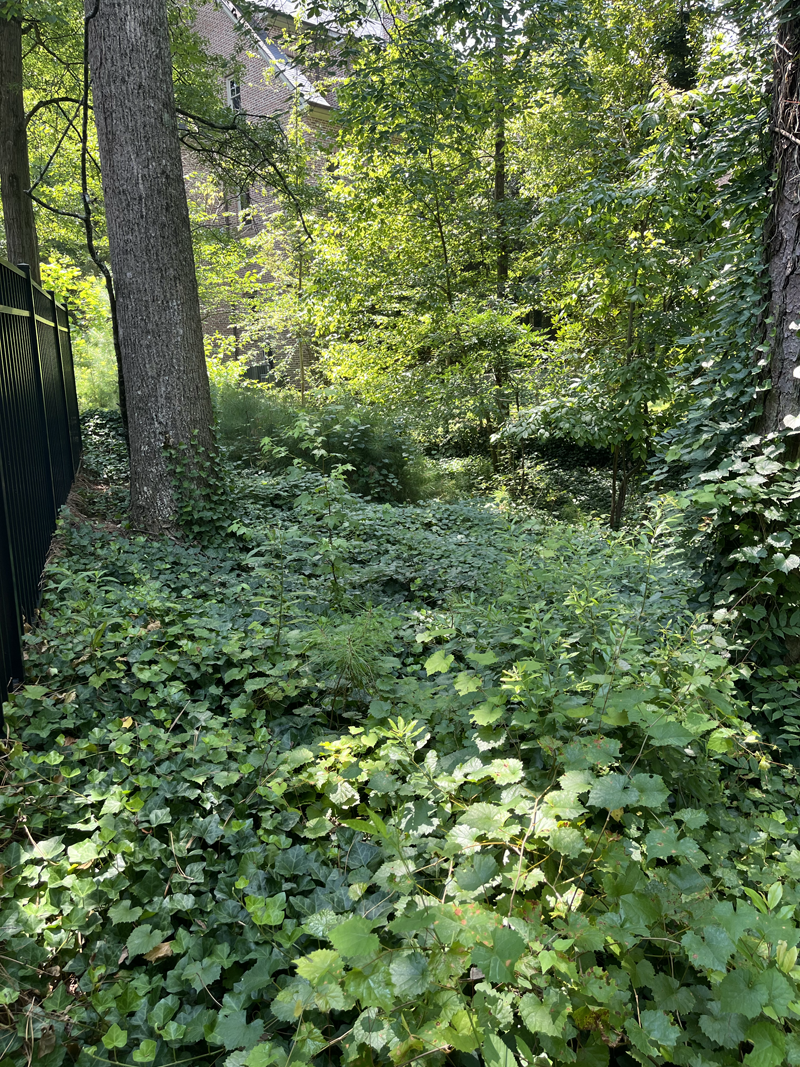
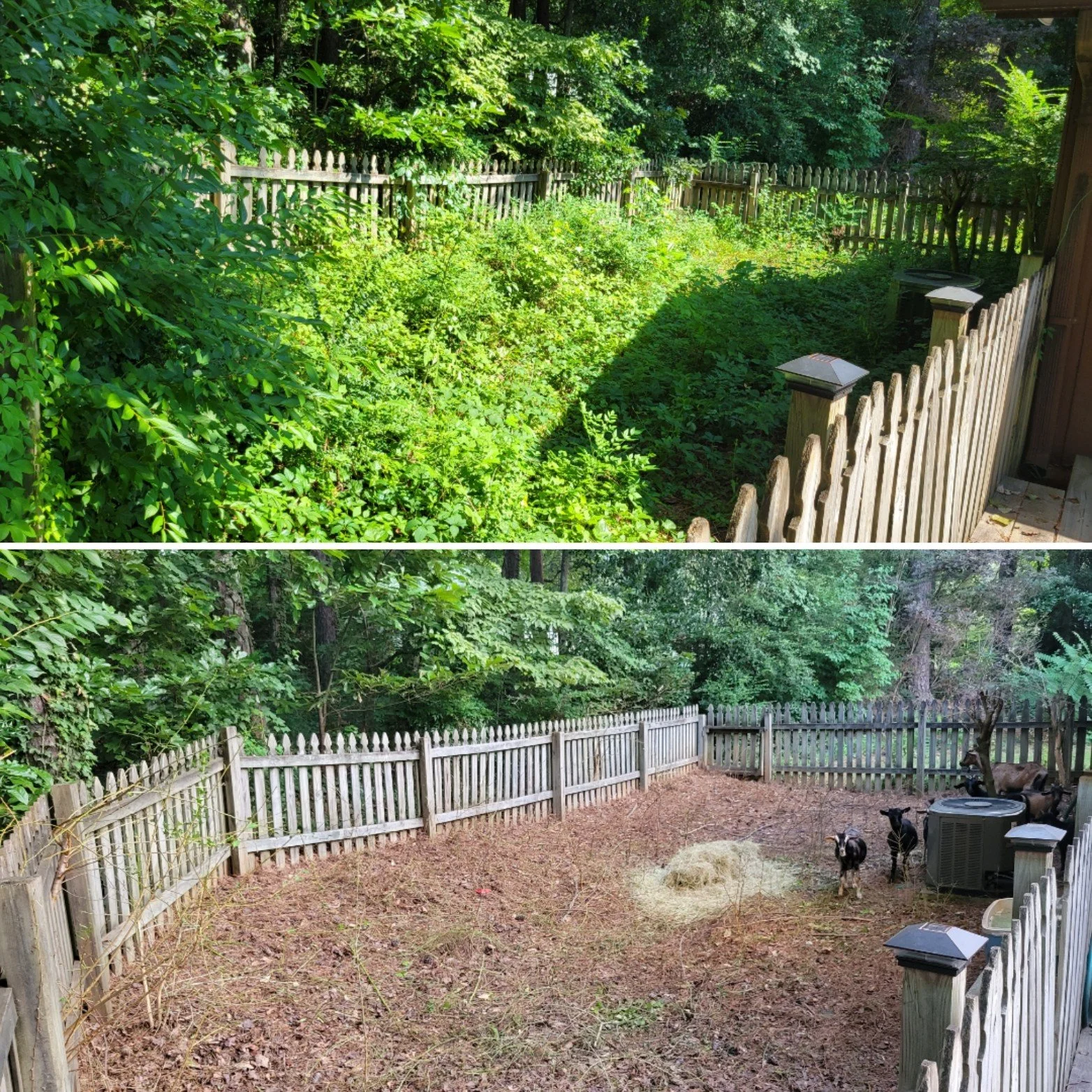
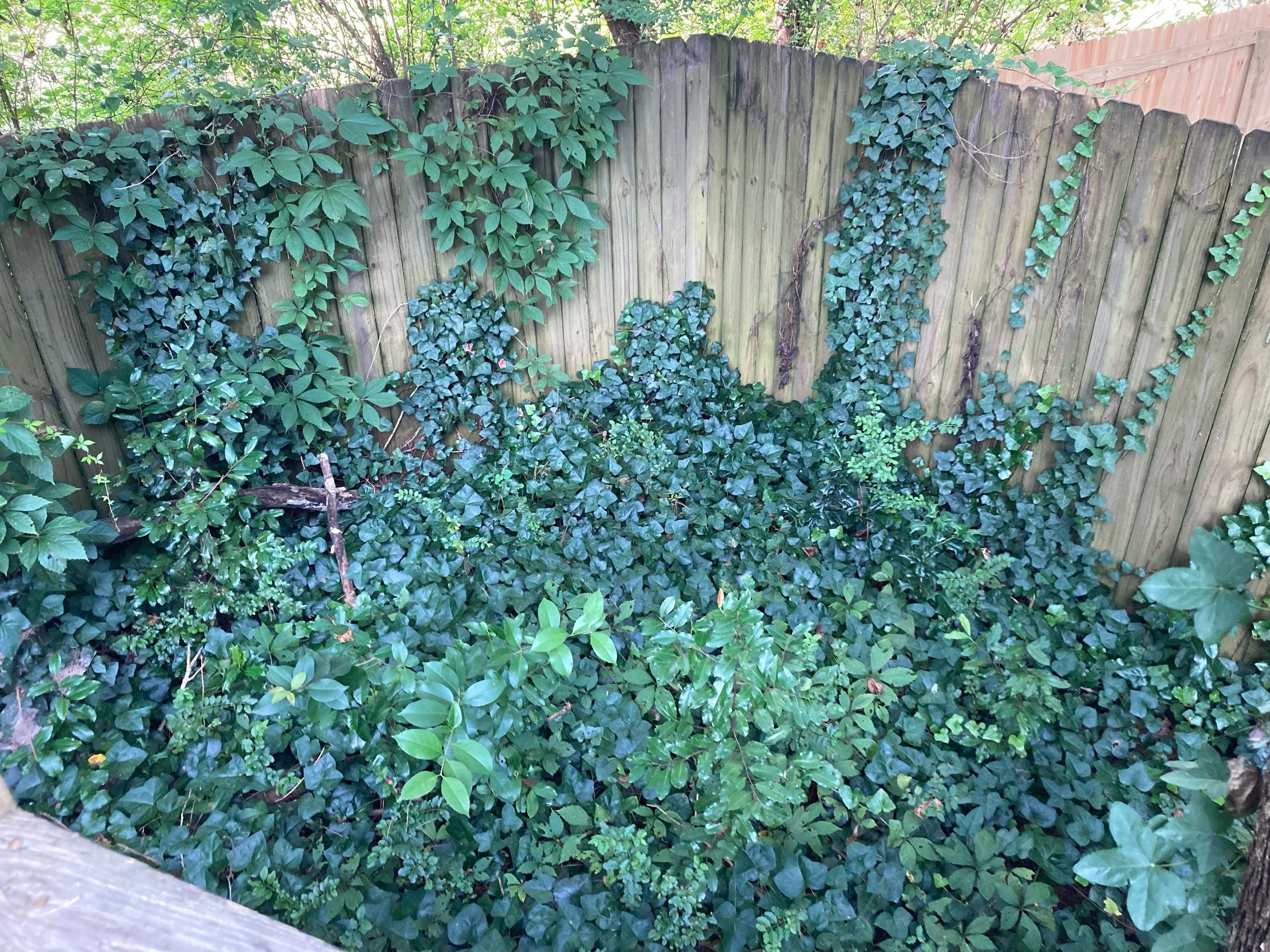
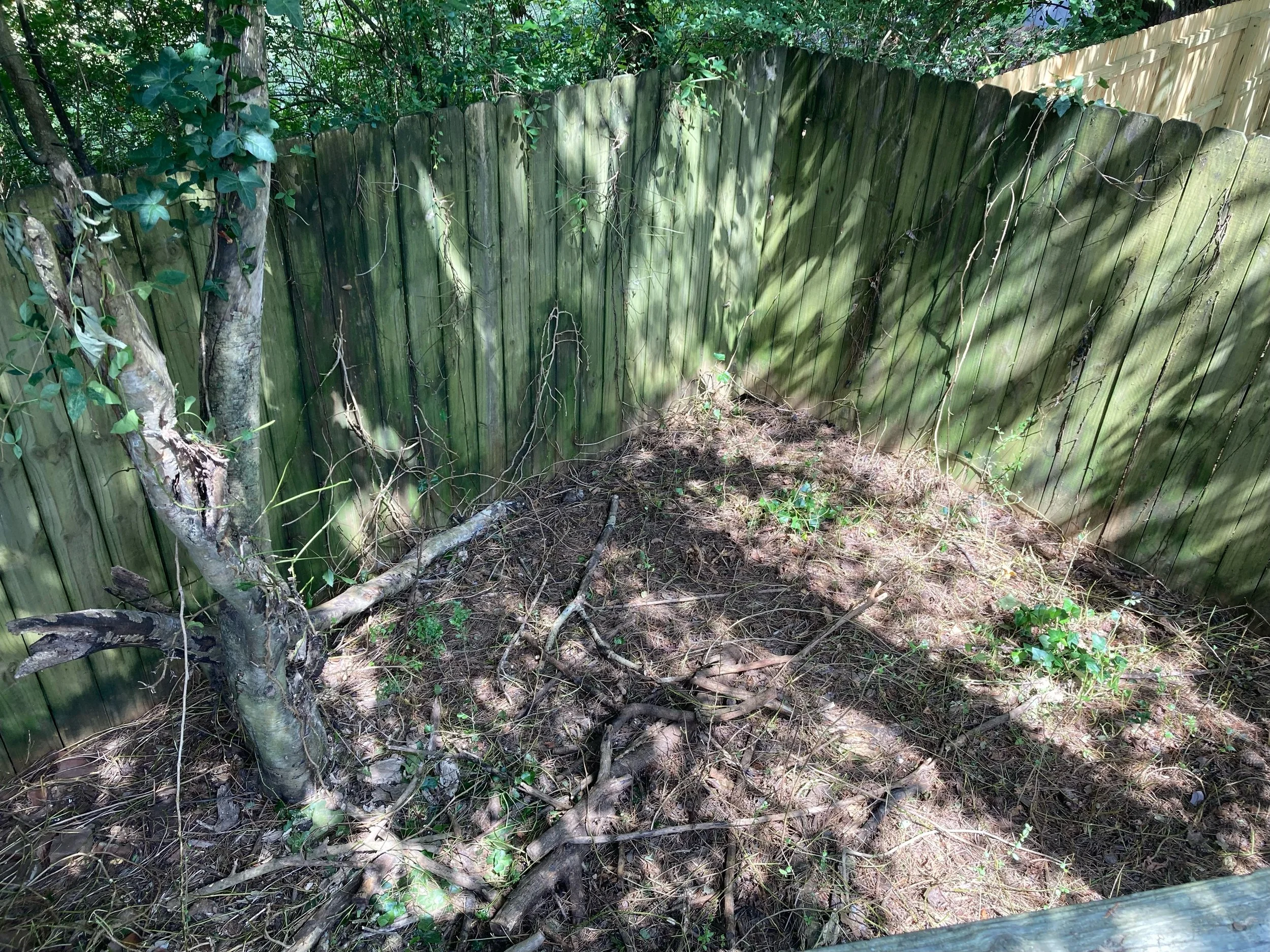
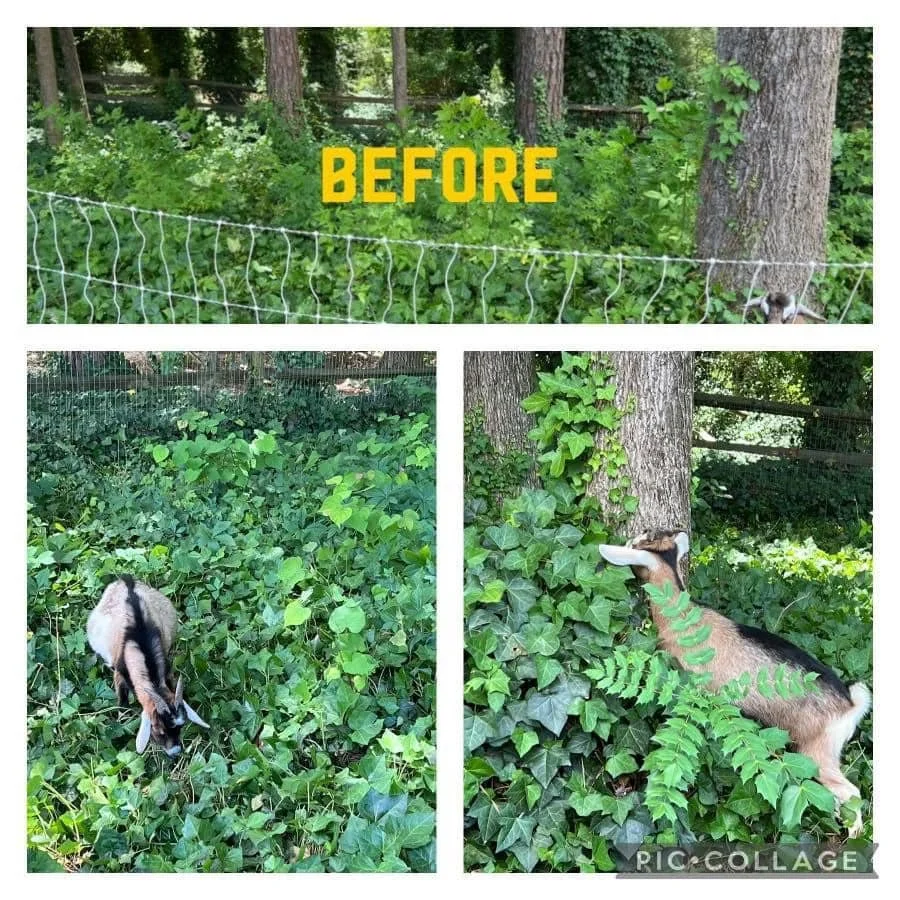
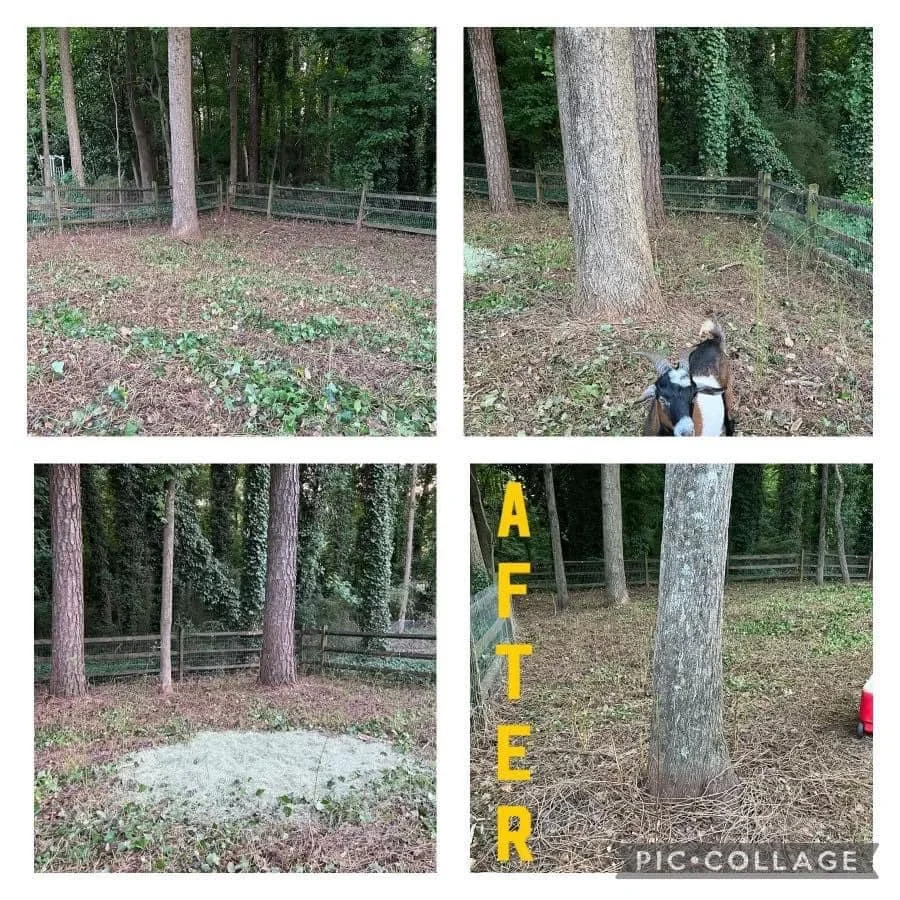
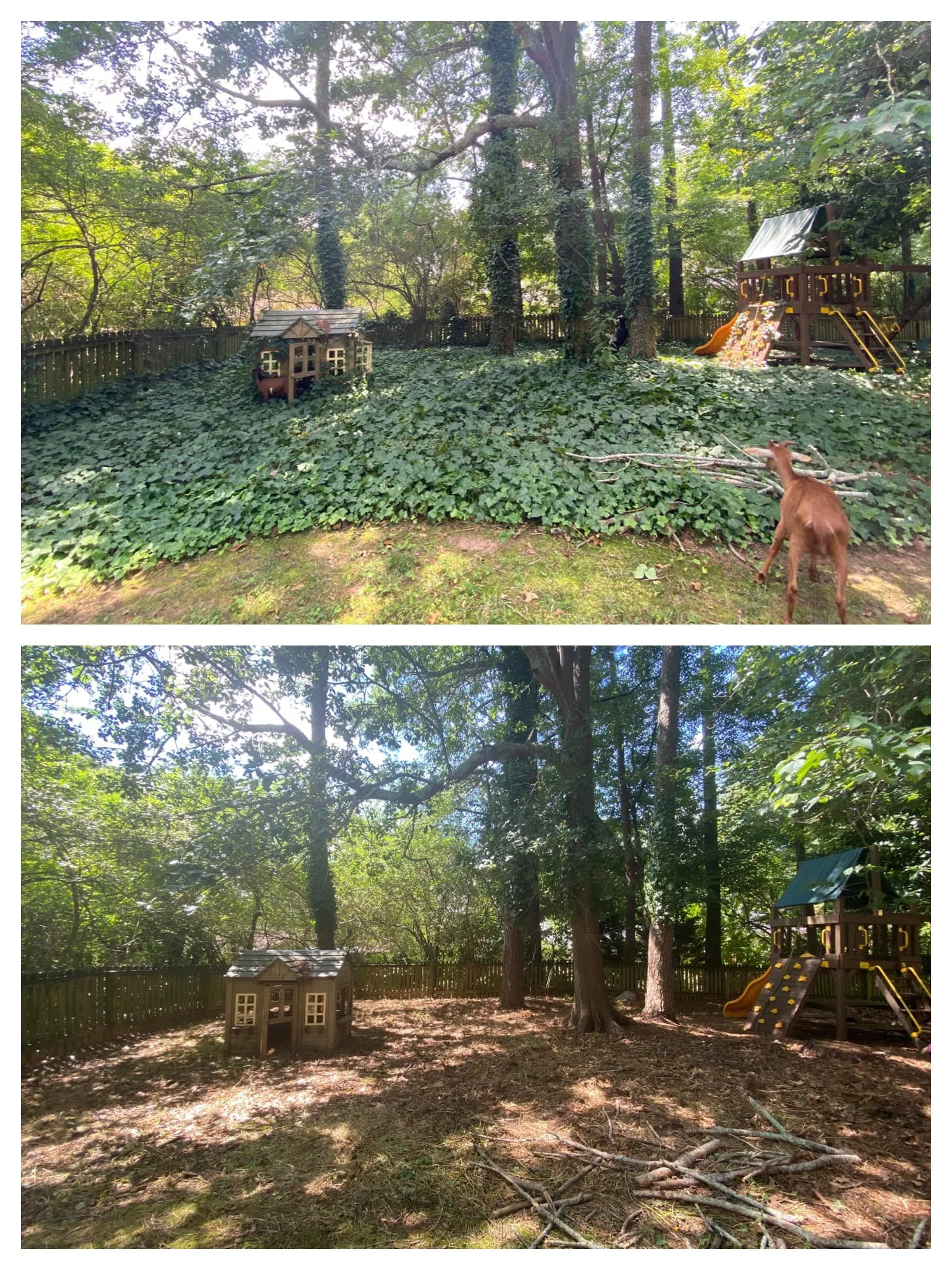
For well established vine systems, such as english ivy and kudzu, it is rare that goats are a one-and-done solution.
Some of our customers use goats as a precursor to a larger project — to defoliate and make an area easier to navigate, and to damage the plants root structures. For persistent vines like ivy and kudzu, sheet mulching is a great way to further keep regrowth at bay.
We also have customers who enjoy the company of the goats so much that they have them back for annual maintenance, which is also a great option. We offer monthly subscription plans for maintenance customers so that you can break the cost up over the course of the year.
-
The goats’ favorites are chinese privet, kudzu, english ivy, poison ivy, wisteria and general brush.
They remain on the fence about muscadine, virgina creeper, periwinkle/vinca, goldenrod, tall grasses, and mahonia. They will often nibble at these items, but it isn’t guaranteed.
Common plants toxic to goats are: azalea, nandina, poke weed, and mountain and cherry laurel. With the exception of cherry laurel, our goats are trained to avoid most of these. Properties with an abundance of cherry laurel will need pre-clearing either by our staff or the customer.
-
Unfortunately, in using goats to clear land, it is generally and all or nothing situation. We can put up electric fencing as a divider, but everything on the “goat side” will be fair game.
Goats do not typically defoliate flowering shrubs like azalea or hydrangea, and other woody shrubs will typically withstand a defoliation by the goats if it is a well-established, healthy shrub.
-
If you have reliable fencing, the sky is the limit. We are currently only able to run 600–800 ft of electric fencing at a time (about a half acre if all 4 sides need fencing.)
Jobs larger than this will require multiple rotations, which will each incur a separate setup fee – for many of these jobs, we will refer you to our partner company who can accommodate larger areas with fewer rotations.
Goats are often not a cost effective solution for properties over 2-3 acres if unfenced, due to the ongoing labor costs of rotating the fencing, since we typically can only treat about a half acre at a time. -
No. Goats’ parasites thrive at the ground/decomposition layer and they do not eat further than that.
Root structures may be damaged from the defoliation, but they will remain intact, in the ground.
-
We like to think we have the best loved goats in town! Best cared for and best loved by customers.
All of our goats spend their first year of life at the farm, getting to do yoga classes, and get lots of cuddles and pets so they are very social.
We have a few born with a naturally shy temperament, but for the most part, people love having them visit and are able to interact with them a great deal.
Our goats get lots of love, routine vet care, and they ALL have names and stories. We tremendously value our customers, but at the end of the day, our goats’ (and humans’) safety and well-being ALWAYS come first.
-
Most of our residential jobs are done in 4-7 days
-
It depends on the size of your property and which herd we have available, but we typically bring 7–15 goats in a herd.
-
No. Many things are toxic to goats and eating anything that is not plant matter can make them very ill or kill them.
Please do not feed them any plant we haven’t approved. If you’d like to give them snacks, they can have a couple apple, banana or carrot slices, but please keep it to a minimum so they can get their job done in a timely matter.
-
In short, no. They may nibble on grass, and really love certain grasses, but they will not trim it evenly and will not take it down further than a lawnmower would.
Goat clearing is more for brush and vines, and isn’t a suitable solution for regular grass mowing.
-
Yes! We do, please check out our landscaping page to learn more.
land clearing, brush clearing, kudzu removal, english ivy removal, poison ivy removal, privet removal, retention pond clearing, retention pond maintenance, detention pond clearing, detention pond maintenance, clear underbrush, brush hog, bush hog, brushhog, bushhog, forest mulching, landscaping, goatscaping, how can I rent goats, where can i rent goats in atlanta, can goats eat my ivy, sheep rental, goat rental, sheep for rent, goats for rent, sheep for hire, goats for hire, do goats clear ivy, do sheep clear ivy, atlanta goat rentals, atlana sheep rentals, stone mountain goat rentals, stone mountain goats, stone mountain farm, decatur goat rentals, decatur goat grazing, atlanta goat grazing, goat grazing, targeted grazing, decatur goats, decatur goat yoga, brookhaven goat clearing, tucker goat clearing, lilburn goat clearing, snellville goat clearing, norcross goat clearing, rent goats, how to rent a goat, get your goats, get your goat rentals, city sheep, ewe can do it naturally, landscaping, goatscaping, atlanta goat scaping, decatur goatscaping, decatur, atlanta, metro atlanta, georgia, snellville, tucker, lilburn, goats for rent, rental goats